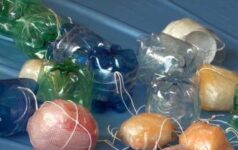
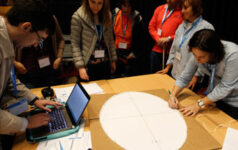
Try these hands-on activities to introduce your students to microplastics – a hazard for fish and other marine animals – and to our responsibilities to our environment.
Ages: <11, 11-14, 14-16; Topics: Biology, Chemistry, Earth science, Science and society
Science in School is published by EIROforum, a collaboration between eight of Europe’s largest intergovernmental scientific research organisations (EIROs). This article reviews some of the latest news from EIROs.
Ages: not applicable; Topics: News from the EIROs, Physics, Biology, Chemistry
Science in School is published by EIROforum, a collaboration between eight of Europe’s largest intergovernmental scientific research organisations (EIROs). This article reviews some of the latest news from EIROs.
Ages: not applicable; Topics: News from the EIROs, Physics, Biology, Chemistry