Showing 10 results from a total of 338
June 11, 2026 | Issue 78
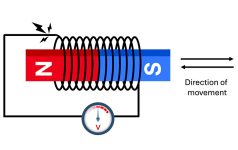
Three simple experiments illustrating Faraday’s law of induction and the different ways induced currents may be generated.
Ages: 16-19; Topics: Engineering, Physics
June 11, 2026 | Issue 78
Most people know that the Moon and the Sun cause the tides, but few understand why we get two high tides each day, or why a tidal bulge forms on the opposite side of the Earth from the Moon.
Ages: 11-14, 14-16; Topics: Earth science, Physics
April 2, 2026 | Issue 77
Exoplanets are planets orbiting stars beyond our Sun. Discovering them may answer one of the most asked questions: Are we alone in the universe?
Ages: 14-16, 16-19; Topics: Astronomy / space, General science, Mathematics, Physics, Resources, STEAM
April 2, 2026 | Issue 77
X-ray light does not only enable us to look at our bones, it also helps scientists to analyse tiny molecules that make up all living things.
Ages: 11-14; Topics: Biology, Chemistry, Engineering, News from the EIROs, Physics
April 2, 2026 | Issue 77
Discover how hands-on experiments can introduce students to light and particles through the lens of space exploration.
Ages: 11-14, 14-16, 16-19; Topics: Astronomy / space, Physics, Science and society
April 2, 2026 | Issue 77
Invisible soap, heavy water and a research reactor come together to provide enlightening insights into how plants and bacteria turn light into food.
Ages: 11-14, 14-16, 16-19; Topics: Biology, Chemistry, Earth science, News from the EIROs, Physics, Sustainability
April 2, 2026 | Issue 77
For fusion researchers, light is far more than a symbol, it is an essential tool.
Ages: 16-19; Topics: Engineering, News from the EIROs, Physics, Sustainability
April 2, 2026 | Issue 77
What makes emerald green fade in famous paintings? Scientists at ESRF study how colours fade.
Ages: 11-14, 14-16, 16-19; Topics: Chemistry, News from the EIROs, Physics
April 2, 2026 | Issue 77
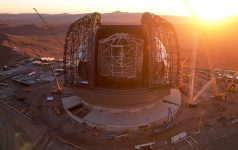
”Faster, Higher, Stronger – Together”, the Olympic motto, could also apply to telescopes with a slight modification: “Bigger, Deeper, Sharper – Together”
Ages: 11-14, 14-16, 16-19; Topics: Astronomy / space, Physics, News from the EIROs
February 3, 2026 | Issue 76
Students worldwide can win a life-changing opportunity to work at a real particle accelerator such as CERN, DESY or ELSA.
Ages: 14-16, 16-19; Topics: Events, Engineering, News from the EIROs, Physics