Are we alone? Exoplanets may hold the answers
Exoplanets are planets orbiting stars beyond our Sun. Discovering them may answer one of the most asked questions: Are we alone in the universe?
Showing 10 results from a total of 55
Exoplanets are planets orbiting stars beyond our Sun. Discovering them may answer one of the most asked questions: Are we alone in the universe?
How to teach radioactive decay and radioisotopes to students who feel that equations are boring? Here are two inexpensive and captivating activities to apply in your classroom!
Speed of sound: use the sound-recording function of a smartphone to precisely measure a projectile’s speed and calculate a safe dodging distance.
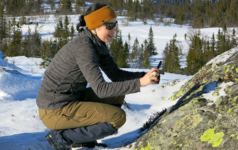
Super (role) models: Use stories about real scientists to inspire, build confidence, and help the next generation of innovators envision their place in STEM.
Live by your wits: group interviews based on disaster scenarios provide a fun opportunity to develop scientific literacy and transferable skills.
A maths field trip? Yes, really! MathCityMap transforms any space outside the classroom into an outdoor mathematical laboratory.
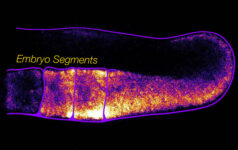
Tick tock: Did you know that there are secret clocks ticking inside living organisms, including us? Let’s dive into the science of biological oscillators.
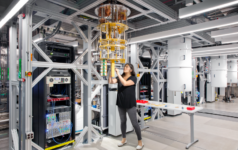
Stranger things: discover quantum computers, which are based on a new approach to computing powered by the strange behaviour of subatomic particles.
Not sure how best to source and create images for sharing your teaching materials? It’s a snap if you follow these simple tips!
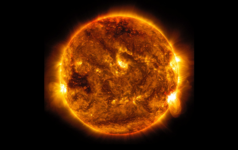
Starstruck: with just water, sunlight, and simple equipment, students can use their physics knowledge to calculate the temperature of the Sun.
Are we alone? Exoplanets may hold the answers
Teach radioisotopes and decay interdisciplinarily at a low cost
Measuring the speed of a toy-gun foam projectile – a handy guide
Bringing STEM to life: using LabXchange Narratives to inspire tomorrow’s scientists
Survival science: learning through group interviews
MathCityMap: take maths lessons out into the city
Biological oscillations: the rhythms of living things
Quantum computing: is quantum mechanics the next computing superpower?
Picture perfect: making the most of images when creating and sharing teaching resources
Estimation of the Sun’s temperature without leaving the school