
Advent calendar 2010
November 30, 2015 | Issue 17Welcome to the Science in School advent calendar for 2010: a daily collection of scientific ideas and teaching activities related to Christmas, winter and the end of term.




Welcome to the Science in School advent calendar for 2010: a daily collection of scientific ideas and teaching activities related to Christmas, winter and the end of term.
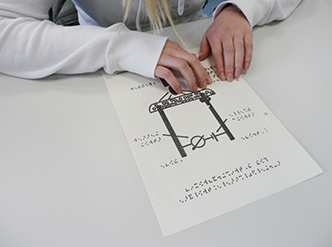
Biology and chemistry teacher Werner Liese talks to Marlene Rau about the challenges of performing science experiments with blind and visually impaired students.


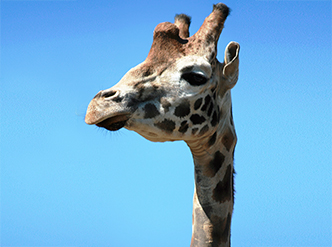
The United Nations has declared 2010 the International Year of Biodiversity (IYB). Ivo Grigorov, Lise Cronne and Giulia Realdon provide a collection of web resources for teachers and students on the occasion.

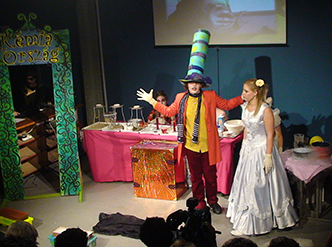
In more than 20 European countries, teachers are sharing their inspiring teaching ideas with colleagues, students and the general public via Science on Stage. Eleanor Hayes reviews some of the recent events.

A Private Universe depicts a very familiar situation for teachers worldwide, namely that students do not let go of their misconceptions as easily as might be expected after a detailed and thorough learning process.
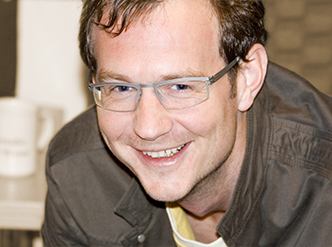
What do astronomy and film have in common? Both can involve Jochen Liske, astronomer and actor. Karin Ranero Celius takes us on a trip to the Paranal Observatory in Chile and tells us about Jochen’s latest film: Das Auge 3D.

How short is ‘very short’? Well, pretty short – between 120 and 150 pages. The pages are small, too, 175 mm x 110 mm, but then so is the type. ‘Introduction?’ …well, it depends what’s being introduced.
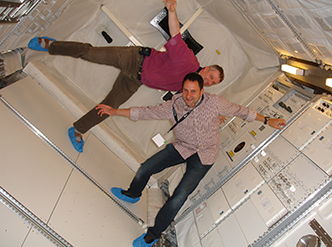
Eleanor Hayes reports on the recent teacher workshop at the European Space Research and Technology Centre.
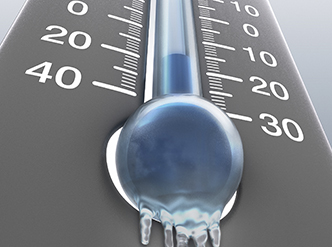
When we cool something below its freezing point, it solidifies – at least, that’s what we expect. Tobias Schülli investigates why this is not always the case.

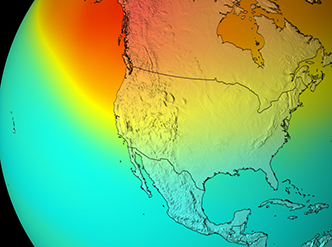
Twenty-five years ago, the discovery of the hole in the ozone layer hit the news. How have things developed since? Tim Harrison and Dudley Shallcross investigate.

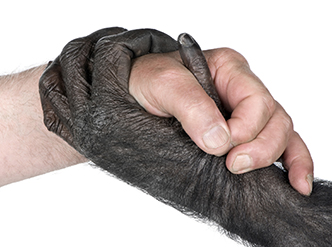
In the second of two articles, Jarek Bryk describes how scientists dig deep into our genes – to test the molecular basis of an evolutionary adaptation in humans.



The physics of clouds and their role in our climate have perplexed scientists for decades. Karin Ranero Celius investigates.

Men and women react differently to humour. Allan Reiss tells Eleanor Hayes why this is news.

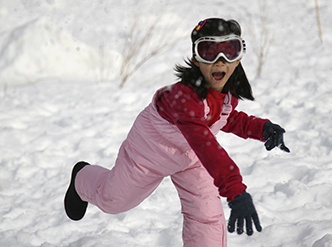
Students often find it difficult to calculate the trajectories of projectiles. With the help of Elias Kalogirou’s model, they can be easily visualised. In addition, Ian Francis suggests further uses for the model in the classroom.
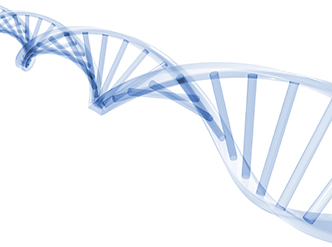
Bioinformatics is usually done with a powerful computer. With help from Cleopatra Kozlowski, however, you can investigate our primate ancestry – armed with nothing but a pen and paper.

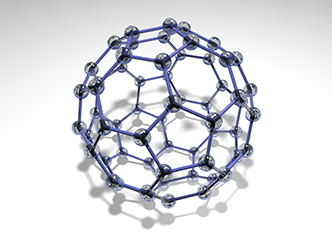
Eleanor Hayes highlights some education resources about the nanoscale and nanotechnology.

Imagine sending music across the room by laser. Sounds impossible, doesn’t it? But Alessio Bernardelli’s students did just that – and then developed a play to explain the science behind it. Here’s how to do it.

Do men and women share the same sense of humour? Perhaps, but their brains react differently to it, as Allan Reiss explains in this issue’s feature article.