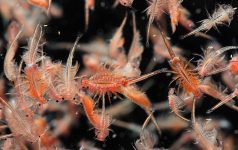
Explore Mars in the classroom through accessible experiments with Artemia, linking astrobiology, aquatic ecology, light responses, and scientific inquiry.
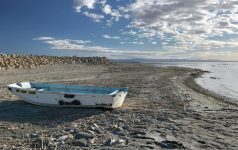
Most people know that the Moon and the Sun cause the tides, but few understand why we get two high tides each day, or why a tidal bulge forms on the opposite side of the Earth from the Moon.
To mark Science in School’s 20th anniversary, we are launching a student writing competition inviting young people to explore the topic of sustainable and resilient tourism.
Ages: 14-16, 16-19; Topics: Earth science, Sustainability, Science and society, General science
To mark Science in School’s 20th anniversary, we are launching a student writing competition inviting young people to explore the topic of sustainable and resilient tourism.
Ages: 14-16, 16-19; Topics: Sustainability, Earth science, Science and society, General science
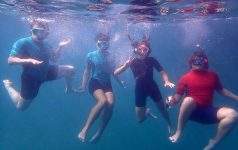
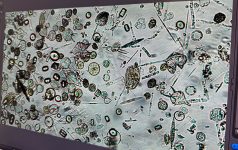
Turn your classroom into a marine science station and step into the lively world of plankton – tiny aquatic dancers under the microscope that quietly power food webs and even Earth’s ecosystems.
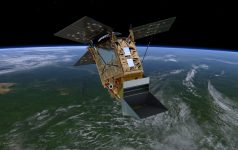
What can the colours on a satellite map actually tell us about the air we breathe?
Join us as we explore how the Copernicus Sentinel satellites detect gases such as nitrogen dioxide, and how chemistry helps us understand what’s happening in the atmosphere above us.