
Issue 18
Last updated Tue, 2012-05-15 14:58 — rau
Editorial
News from the EIROs
- Mars, snakes, robots and DNA
EIROforum, the publisher of Science in School, reports on the latest news from its eigth European inter-governmental research organisations.
Read (English, French) | PDF [816 KB]
Events
- Forthcoming events
Read (frequently updated)
- Science on Stage: countdown to the international festival
Science on Stage brings together many of Europe's most innovative and inspiring science teachers. Andrew Brown reviews some of the recent national activities.
Read (English, Romanian) | PDF [208 KB]
- Young scientists at the cutting edge: EIROforum prize winners
Courtney Williams, winner of the CERN prize at the European Union Contest for Young Scientists 2009, reports on her experiences and those of the other EIROforum prize winners.
Read (English, Romanian) | PDF [316 KB]
- Young minds in science: the European Union Contest for Young Scientists 2010
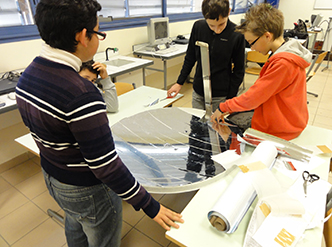
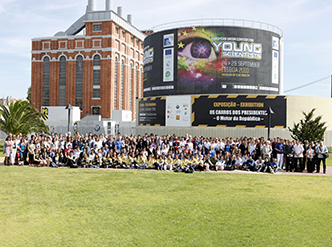
Marlene Rau reports on the 22nd European Union Contest for Young Scientists (EUCYS).
Read (English, Polish, Romanian)| PDF [296 KB]
Feature article: Tim Birkhead
- Battle of the birds: interview with Tim Birkhead
Tim Birkhead tells Karin Ranero Celius about promiscuous birds and teaching science students.
Read (English, French, Polish, Portuguese, Romanian, Spanish) | PDF [656 KB]
Cutting-edge science
- Moringa: the science behind the miracle tree
Moringas have long been known as miracle trees. Now scientists are investigating their properties in depth, as Sue Nelson and Marlene Rau report.
Read (English, Italian, Polish, Romanian, Serbian, Spanish) | PDF [852 KB]
- Uracil in DNA: error or signal?
Uracil is well known as one of the bases used in RNA, but why is it not used in DNA - or is it? Angéla Békési and Beáta G Vértessy investigate.
Read (English, French, German, Greek, Italian, Polish, Portuguese, Romanian, Serbian) | PDF [540 KB]
- A neural switch for fear
When something frightens us, should we freeze, or should we investigate? Sarah Stanley describes how scientists are probing the mysteries of the brain, seeking to understand our response to fear.
Read (English, French, German, Italian, Polish, Portuguese, Romanian)| PDF [588 KB]
Teaching activities
- The resourceful physics teacher
Physics teacher Keith Gibbs shares some of his many demonstrations and experiments for the physics classroom.
Read (English, Dutch, Greek, Polish, Spanish)| PDF [544 KB]
- Breeding dragons: investigating Mendelian inheritance
Mendelian inheritance can be a tricky topic to teach, but Pat Tellinghuisen, Jennifer Sexton and Rachel Shevin's memorable dragon-breeding game makes it easier to understand and remember.
Read (English, French, German, Greek, Polish, Spanish) | PDF [292 KB]
Projects in science education
- The heat is on: heating food and drinks with chemical energy
Have you ever longed for a hot drink or meal but had no fire or stove to hand? Try these two activities from the Lebensnaher Chemieunterricht portal, introducing exothermic reactions.
Read (English, French, Greek, Italian, Romanian, Spanish) | PDF [352 KB]
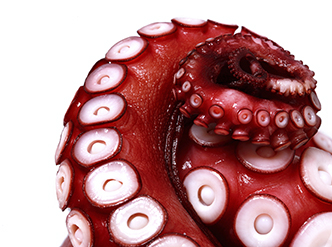
- Biomimetics: clingy as an octopus or slick as a lotus leaf
Astrid Wonisch, Margit Delefant and Marlene Rau present two activities developed by the Austrian project 'Naturwissenschaft und Technik zum Angreifen' to investigate how technology is inspired by nature.
Read (English, French, German, Greek, Polish, Romanian) | PDF [1.1 MB]
Science topic
- Single molecules under the microscope
Would it not be fascinating to observe and manipulate individual molecules? With an atomic force microscope, you can do just this. You could even build your own.
Read (English, Dutch, German, Greek, Hungarian, Polish)| PDF [612 KB]
Teacher profile
- Teacher solidarity: a UK-Rwandan physics project
Thanks to the determination of UK physics teacher David Richardson, increasing numbers of students in Rwandan schools are experiencing the delight of practical work.
Read (English, Spanish) | PDF [232 KB]
Scientist profile
- To sea with a blind scientist
Scientific research is not a career that most people believe to be suitable for the blind, but blind biologist Geerat Vermeij explains that, whether you are blind or not, science is competitive, tedious and hard – and he loves it.
Read (English, Polish) | PDF [332 KB]
Reviews
Return to top of page
Science in School email alert
|