Are we alone? Exoplanets may hold the answers
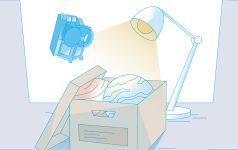
Exoplanets are planets orbiting stars beyond our Sun. Discovering them may answer one of the most asked questions: Are we alone in the universe?
Showing 10 results from a total of 50
Exoplanets are planets orbiting stars beyond our Sun. Discovering them may answer one of the most asked questions: Are we alone in the universe?
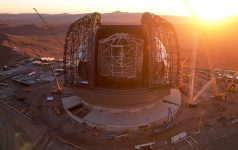
”Faster, Higher, Stronger – Together”, the Olympic motto, could also apply to telescopes with a slight modification: “Bigger, Deeper, Sharper – Together”
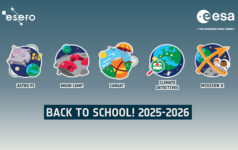
Explore five inspiring STEM projects from ESA and the ESERO network. Use the excitement of space to engage students and enhance your STEM teaching!
Discover five exciting projects from ESA and its ESERO network. Use space to motivate and enrich your lessons for out-of-this world STEM lessons!
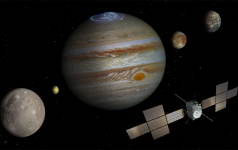
Join ESA’s interplanetary spacecraft Juice on a voyage to the mysterious gas giant Jupiter to uncover the secrets of its intriguing icy moons.
Space is a great topic for inspiring students while teaching curriculum-relevant science. Start now with ESA’s teach with space program.
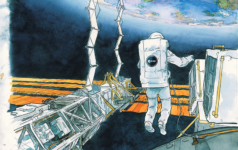
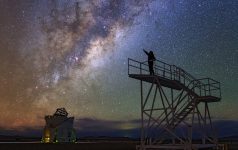
We can’t image our home galaxy from the outside, so how do we study it? Learn how astronomers unveil the dramatic past of the Milky Way and peer into its future.
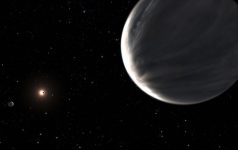
A whole new world: you may have heard of rocky planets, gas giants and ice giants, but what about water worlds? Learn about the discovery of an entirely new planet type.
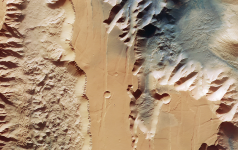
Recent images from ESA's Mars Express mission show two ruptures in the martian crust that form part of a mighty canyon system.
Sparks students’ natural curiosity while learning about curriculum-relevant topics with ESA’s teach with space program.
Are we alone? Exoplanets may hold the answers
Harvesting light with the biggest eye on the sky
Back to School with space-related STEM projects from ESA and ESERO 2025–2026
Save the Date: Back to School 2024-2025 with ESA and ESERO
To Jupiter’s icy moons: Juice’s odyssey of exploration
Save the date for Back to School with ESA 2023–2024
Galactic Archaeology: how we study our home galaxy
Hubble helps discover a new type of planet largely composed of water
Mars Express peers into Mars’ ‘Grand Canyon’
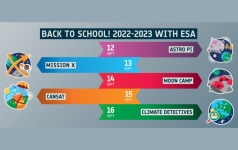
Save the date for Back to School with ESA 2022–2023