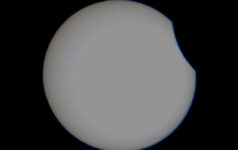
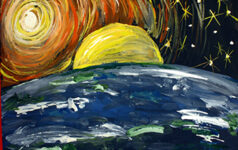
Students Jan Měšťan and Jan Kotek and teacher Marek Tyle from the Gymnázium Písek in the Czech Republic won the 2007 Catch a Star competition. Sai Pathmanathan describes their prize-winning project.
Ages: 14-16, 16-19; Topics: Physics, Astronomy / space
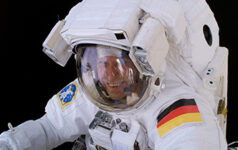
Shortly before Christmas 2006, German ESA astronaut Thomas Reiter returned from the International Space Station. A month later, Barbara Warmbein asked him about his trip, the experiments he did – and how to become an astronaut.
Ages: 11-14, 14-16, 16-19; Topics: Physics, Biology, Astronomy / space
Ever wanted to take a closer look at the stars? Rachel Dodds from the Faulkes Telescope Project explains how you can do just that – together with your students and without even leaving your classroom!
Ages: 14-16, 16-19; Topics: Physics, Astronomy / space
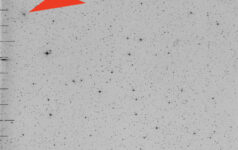
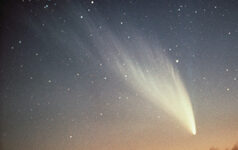
The challenge can be read in ‘The joy of discovery: a personal experience‘ The trail from which Comet West was discovered is indicated by an arrow Image courtesy of ESO
Catch a Star!, an international competition for school students, is starting its fifth year. Douglas Pierce-Price from ESO invites students from all over the world to take part.
Ever wondered what - and who - lies behind the beautiful and fascinating astronomical photographs and observations made with modern telescopes? Douglas Pierce-Price from ESO, the European Organisation for Astronomical Research in the Southern Hemisphere, describes a day in the life of the Very…
Ages: 14-16, 16-19; Topics: Physics, Astronomy / space
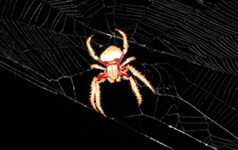
An ambitious Australian school project sent spiders into space to experience microgravity. 'Spiders in Space' will form the basis of a future project involving many more schools worldwide. Lachlan Thompson and Naomi Mathers, from RMIT University in Melbourne, Australia, explain how it all started.
Ages: 14-16; Topics: Biology, Astronomy / space, General science
Films about science or even pseudo-science can be powerful tools in the classroom. Heinz Oberhummer and Markus Behacker from the Cinema and Science project provide a toolkit for using the film Deep Impact.