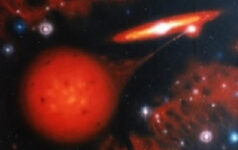
Are we alone? Exoplanets may hold the answers
Exoplanets are planets orbiting stars beyond our Sun. Discovering them may answer one of the most asked questions: Are we alone in the universe?
Showing 10 results from a total of 121
Exoplanets are planets orbiting stars beyond our Sun. Discovering them may answer one of the most asked questions: Are we alone in the universe?
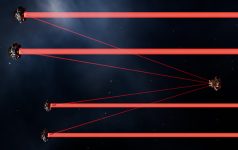
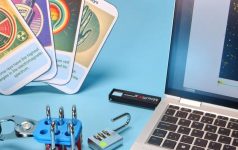
Discover how hands-on experiments can introduce students to light and particles through the lens of space exploration.
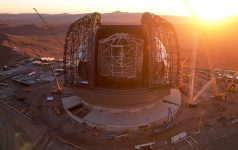
”Faster, Higher, Stronger – Together”, the Olympic motto, could also apply to telescopes with a slight modification: “Bigger, Deeper, Sharper – Together”
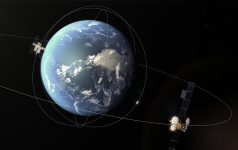
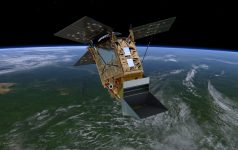
What can the colours on a satellite map actually tell us about the air we breathe?
Join us as we explore how the Copernicus Sentinel satellites detect gases such as nitrogen dioxide, and how chemistry helps us understand what’s happening in the atmosphere above us.
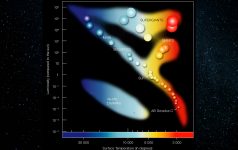
From notebook sketches to space-telescope data: explore how mapping starlight using the Herzsprung-Russell (H-R) diagram helps us trace the life stories of stars across the universe.

Meet antimatter – nature’s invisible twin that could explain our existence and inspire our wildest stories.
Meet the universe’s ultimate drama queens – stars that steal, explode, and shine brighter than ever before.
Written in the stars: use microcontrollers and LEDs to model stellar life cycles, scaling billions of years into minutes while exploring stellar evolution.
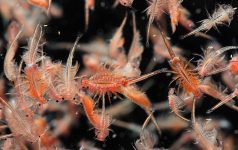
Explore five inspiring STEM projects from ESA and the ESERO network. Use the excitement of space to engage students and enhance your STEM teaching!
Low cost, high impact: try these creative and engaging experiments that use inexpensive everyday materials to bring curriculum science to life.
Are we alone? Exoplanets may hold the answers
Cosmic SOS: exploring light and particles through the lens of space exploration
Harvesting light with the biggest eye on the sky
Eyes in the sky: tracking air pollution with satellites
A map of the stars
Five things that matter about antimatter
Celestial cannibalism: investigating cataclysmic variable stars
Wall of stars: illuminate stellar life cycles with physics and coding
Back to School with space-related STEM projects from ESA and ESERO 2025–2026
Science on a shoestring: inspiring experiments with everyday items