
Editorial issue 75
Science in School arrived at its new home: CERN, Geneva!



Article of the week
Identify tracks of subatomic particles from their ‘signatures’ in bubble chamber photos – a key 20th century technology for studying particle physics.
Read more
Science in School arrived at its new home: CERN, Geneva!

How tiny quantum particles dig into the mysteries of future materials.

Meet antimatter – nature’s invisible twin that could explain our existence and inspire our wildest stories.
We cover a wide range of scientific topics and many articles are additionally available as translations in different European languages.

Explore cutting-edge science and real-world applications.
Discover projects, people, and resources.

Find ideas and teaching materials for classroom activities.
Articles from previous issues

In Issue 4, we challenged you and your students to design the cover for Science in School and were very impressed by the quality of the entries.…

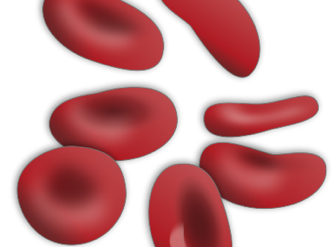
A range of resources to teach about ABO blood…

Learn from nature: biomimicry can be an inspiring interdisciplinary teaching tool that motivates students through engagement with real-world problems.

Discover free events and activities offered by the EIROforum members and other non-profit groups.

EMBL invites STEM educators to join a free in-person course “Epigenetics explained” in Heidelberg, Germany, 2-4 March 2026. Course offers: scientific talks, training on new teaching resource & more. Applications open until 11 January 2026, 23:00 CET.
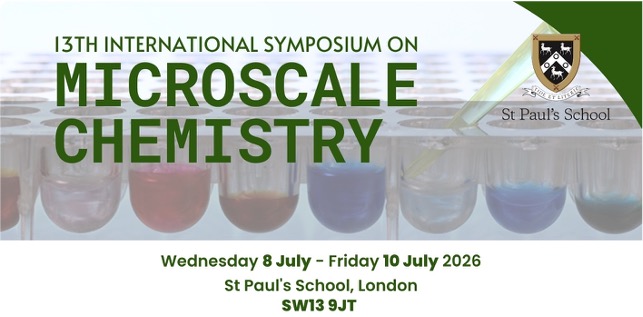
July 8th- 10th, St Pauls School, London I hope you have enjoyed the microscale chemistry articles that Adrian Allan and I presented in issues, 53, 54,57, 60, 65, and 69. If you are teaching chemistry do have a look at them. Other authors have also submitted ideas in issues 16 and 39. It is a…
Do you have an engaging classroom activity to share with other teachers? Is there an interesting scientific topic that you could explain to STEM teachers and their students? We welcome submissions from teachers and scientists.
Would you like to help ensure that our content is interesting, inspiring and useful to STEM teachers? Consider joining the Science in School teacher reviewer panel. There is no obligation; just send us an email to express your interest.
If you find an article interesting or useful, perhaps you'd consider translating it into your native language? This really helps to increase the reach of our content so that as many teachers as possible can benefit from it.