The Beamline for Schools competition: connecting high school students to particle physics since 2014
Students worldwide can win a life-changing opportunity to work at a real particle accelerator such as CERN, DESY or ELSA.



Article of the week
Data has become a powerful tool in our lives, helping us understand the world beyond biases and misinformation. But without engaging communication, this wealth of information and its analysis often goes untapped. Enter data physicalization – the ultimate approach that transforms data into…
Read more
Students worldwide can win a life-changing opportunity to work at a real particle accelerator such as CERN, DESY or ELSA.
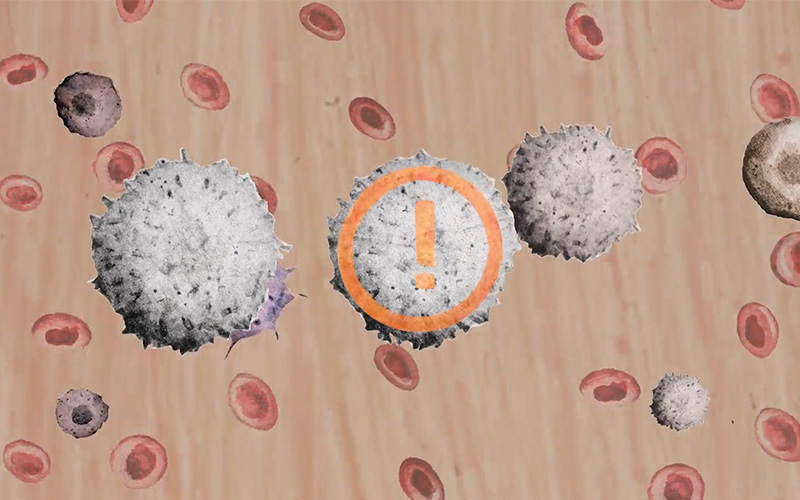
A new short film explores the science behind gene therapies, with the help of five leading experts in the field and a unique, stop-motion animation.
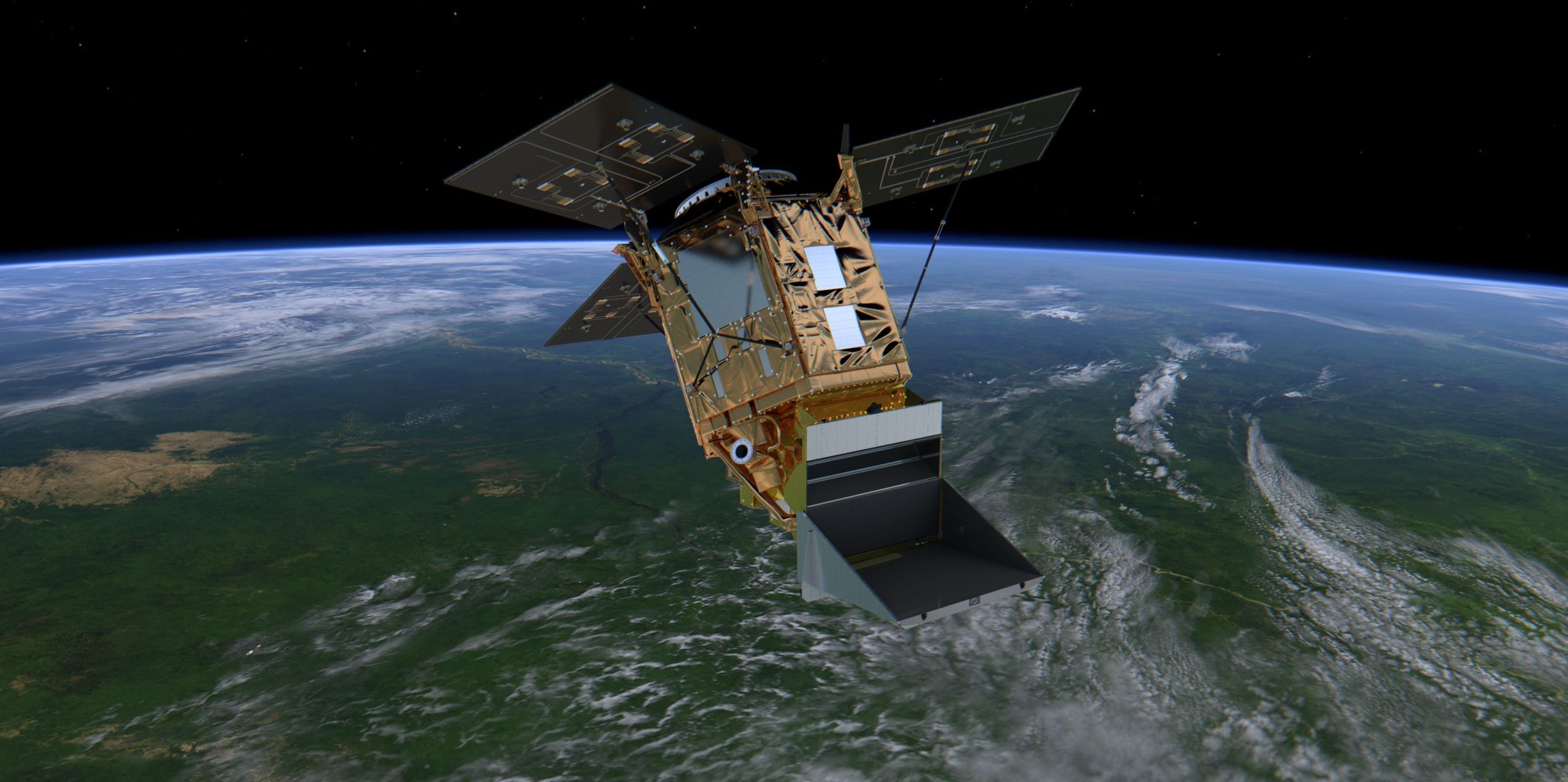
What can the colours on a satellite map actually tell us about the air we breathe? Join us as we explore how the Copernicus Sentinel satellites detect gases such as nitrogen dioxide, and how chemistry helps us understand what’s happening in the atmosphere above us.
We cover a wide range of scientific topics and many articles are additionally available as translations in different European languages.
Explore cutting-edge science and real-world applications.
Discover projects, people, and resources.

Find ideas and teaching materials for classroom activities.
Articles from previous issues

Adapting the steps of the scientific method can help students write about science in a vivid and creative…


Does alchemy sound too good to be true? Paola Rebusco, Henri Boffin and Douglas Pierce-Price, from ESO in Garching, Germany, describe how creating…


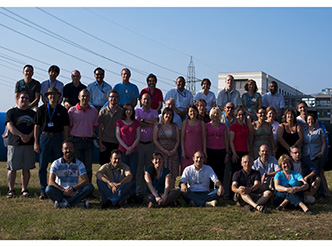
Every year, CERN invites a group of high-school teachers to Geneva, Switzerland, to learn about particle physics – and how to teach it at…

Discover free events and activities offered by the EIROforum members and other non-profit groups.
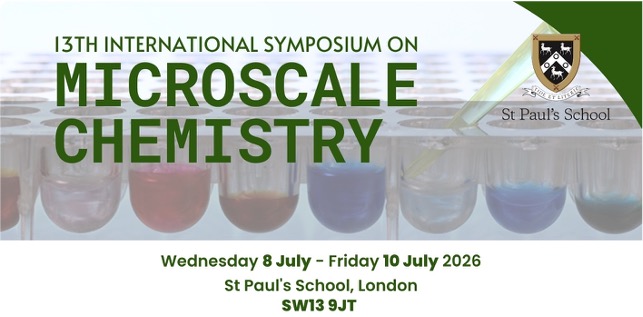
July 8th- 10th, St Pauls School, London I hope you have enjoyed the microscale chemistry articles that Adrian Allan and I presented in issues, 53, 54,57, 60, 65, and 69. If you are teaching chemistry do have a look at them. Other authors have also submitted ideas in issues 16 and 39. It is a…
Do you have an engaging classroom activity to share with other teachers? Is there an interesting scientific topic that you could explain to STEM teachers and their students? We welcome submissions from teachers and scientists.
Would you like to help ensure that our content is interesting, inspiring and useful to STEM teachers? Consider joining the Science in School teacher reviewer panel. There is no obligation; just send us an email to express your interest.
If you find an article interesting or useful, perhaps you'd consider translating it into your native language? This really helps to increase the reach of our content so that as many teachers as possible can benefit from it.