
Sports in a spin
Sporting success requires hard work and talent, and there’s an awful lot of physics determining the perfect shot.
Showing 10 results from a total of 17
Sporting success requires hard work and talent, and there’s an awful lot of physics determining the perfect shot.
Can you play world-class sport, and also be part of a team that tries to understand the nature of our Universe? Yes – just ask Tamara Davis. Henri Boffin from ESO talked to her in Copenhagen, Denmark.
When we watch elite runners breaking world records, we rarely think about the chemistry and physics of the running tracks.
Imagine a barge carrying not coal or other heavy cargo, but something much more precious – inspiration! Beate Langholf from Wissenschaft im Dialog, Germany, describes a science exhibition that travels the rivers of Germany with a different theme each year.
Cell’s movements are important in health and diseases, but their speed is the crucial point for the 2013 World Cell Race organised by Daniel Irimia.
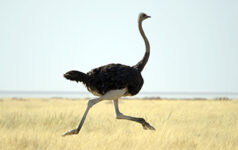
What makes ostriches such fast runners? Nina Schaller has spent nearly a decade investigating.
We all know that exercise makes us fitter and healthier – but what changes take place in our cells to make this happen?
Science in School is published by EIROforum, a collaboration between eight of Europe’s largest inter-governmental scientific research organisations (EIROs). This article reviews some of the latest news from the EIROs.
Sports in a spin
“Intelligence is of secondary importance in research”
On track: technology for runners
The exhibition ship MS Einstein: a floating source of scientific knowledge
Making the right moves
Birds on the run: what makes ostriches so fast?
On your bike: how muscles respond to exercise
Crash-tolerant cars, toxic tattoo ink and the first X-ray laser light