Girls Go STEM: teachers shaping girls’ STEM journeys
Teachers are central to any effort to get more girls interested in STEM. Yet supporting them often comes second to supporting the students.
Showing 10 results from a total of 298
Teachers are central to any effort to get more girls interested in STEM. Yet supporting them often comes second to supporting the students.
What does becoming a Blue School look like? Three European projects show how students investigate water and ocean issues.
Most people know that the Moon and the Sun cause the tides, but few understand why we get two high tides each day, or why a tidal bulge forms on the opposite side of the Earth from the Moon.
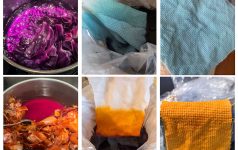
Towards sustainable and circular fashion: learn about different textiles, their characteristics, and how to identify and dye them using natural ingredients.
Cartoons are fun to watch but can also help inspire students and enhance their understanding of science. Here’s how to do that with some classics of European animation.
X-ray light does not only enable us to look at our bones, it also helps scientists to analyse tiny molecules that make up all living things.
Discover how hands-on experiments can introduce students to light and particles through the lens of space exploration.
Invisible soap, heavy water and a research reactor come together to provide enlightening insights into how plants and bacteria turn light into food.
What makes emerald green fade in famous paintings? Scientists at ESRF study how colours fade.
”Faster, Higher, Stronger – Together”, the Olympic motto, could also apply to telescopes with a slight modification: “Bigger, Deeper, Sharper – Together”
Girls Go STEM: teachers shaping girls’ STEM journeys
Blue Schools in practice: how European classrooms explore water and ocean challenges
The pull of the Moon: unlocking the mystery of tides
Colourful nature in your clothes
Teaching science with cartoons from the Zagreb School of Animation
How European XFEL uses X-ray light to make the invisible visible
Cosmic SOS: exploring light and particles through the lens of space exploration
Neutrons elucidate the mysteries of photosynthesis
Is it light or humidity?
Harvesting light with the biggest eye on the sky