Issue 16
Last updated Fri, 2012-10-05 16:49 — celius
Editorial
Events
- Forthcoming events
Read (frequently updated)
- Science on Stage: sharing teaching ideas across Europe
In April 2011, science teachers from across Europe will share ideas at the Science on Stage teaching festival. The search for the lucky 400 teachers continues.
Read (English, Greek) | PDF [1.8 MB]
Feature article: Anne Weaver
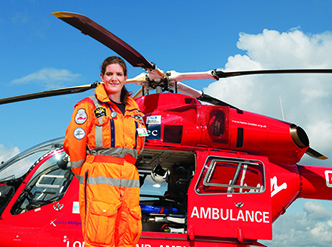
- Life savers in the sky: flying doctors
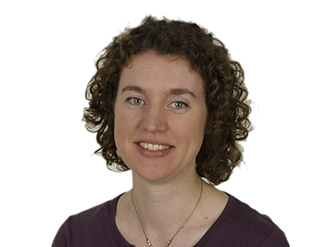
Anne Weaver, lead clinician for London's Air Ambulance tells Marie Mangan about her job: saving lives.
Read | PDF [292 KB]
Cutting-edge science
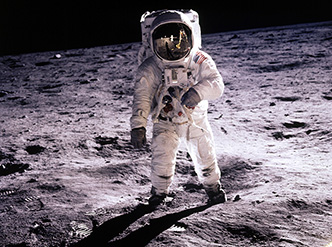
- Space exploration: the return to the Moon
In 1969, Neil Armstrong and Buzz Aldrin became the first humans to walk on the surface of another astronomical body: the Moon. When might humans return to the Moon? Adam Baker investigates.
Read (English, French, Greek, Italian, Polish, Romanian, Spanish) | PDF [232 KB]
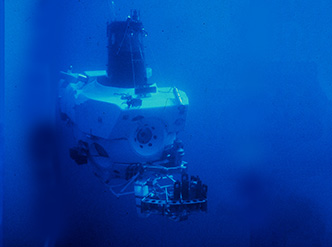
- Hot stuff in the deep sea
How do fossils form around hydrothermal vents? Crispin Little describes how he and his team found out – by making their own fossils.
Read (English, Italian, Polish, Portuguese, Romanian) | PDF [1.9 MB]
Teaching activities
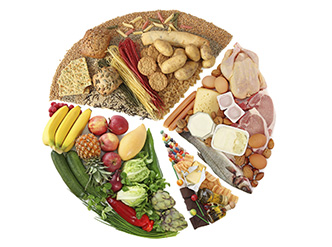
- Using cutting edge science within the curriculum: balancing body weight
Friedlinde Krotscheck describes how she used a cutting-edge science article from Science in School as the main focus of a teaching unit on the human body.
Read (English, Bulgarian, German, Italian, Portuguese, Serbian) | PDF [1.7 MB]
- Microscale chemistry: experiments for schools
Elias Kalogirou and Eleni Nicas introduce a selection of very small-scale chemistry experiments for school.
Read (English, Danish, French, Hungarian, Italian, Spanish) | PDF [1.8 MB]
- Car racing in the physics classroom
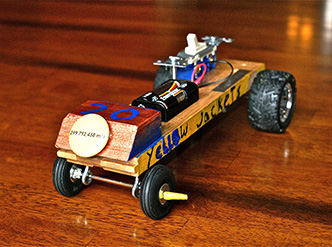
Physical science teacher Nicolas Poynter wanted his students not only to learn but also to think for themselves. His solution: a competition to build the fastest car!
Read (English, Danish, Polish, Spanish) | PDF [1.8 MB]
- Can you spot a cancer mutation?
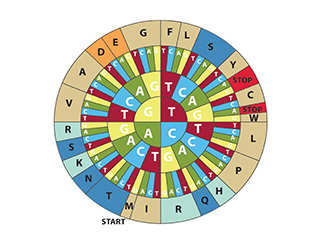
This teaching activity from the Wellcome Trust Sanger Institute investigates how cancer develops, and how geneticists can tell that a cell is cancerous.
Read (English, French, Greek, Hungarian, Italian, Polish, Portuguese, Romanian, Spanish) | PDF [1.7 MB]
Project in science education
- LeSa21: primary-school science activities
Teaching science in primary school can be challenging. Astrid Kaiser and Marlene Rau describe a rich source of online materials in three languages.
Read (English, Polish, Spanish) | PDF [1.7 MB]
Science topics
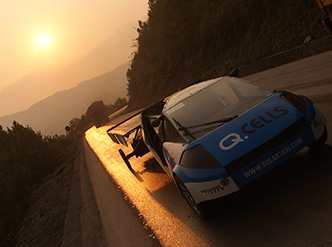
- Solar cars: the future of road transport?
Ever dreamed of a car that needed no fuel and produced no pollution? Mico Tatalovic investigates the solar car.
Read (English, French, Italian, Spanish) | PDF [1.6 MB]
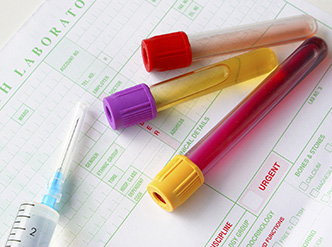
- Evaluating a medical treatment
Sarah Garner and Rachel Thomas consider why well-designed and properly analysed experiments are so important when testing how effective a medical treatment is.
Read (English, Bulgarian, Dutch, German, Portuguese, Spanish) | PDF [1.6 MB]
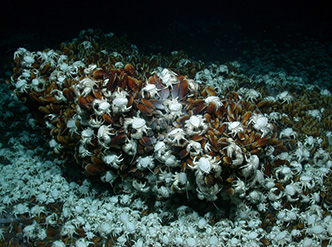
- Cold seeps: marine ecosystems based on hydrocarbons
David Fischer takes us on a trip to the bottom of the sea to learn about cold seeps – their ecosystems, potential fuels, and possible involvement in global warming.
Read (English, Bulgarian, Italian, Polish) | PDF [1.8 MB]
Spotlight on education
- Sven-Olof Holmgren: science education is more complex than particle physics
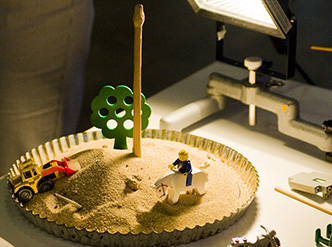
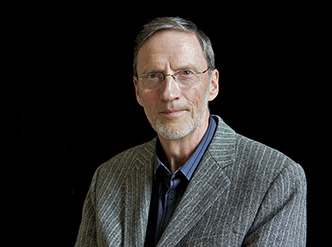
Sven-Olof Holmgren tells Lucy Patterson and Marlene Rau about the challenges of the shift from basic research to science education.
Read (English, Spanish) | PDF [1.7 MB]
Teacher profile
- The physics of inspiration: teaching in Austria
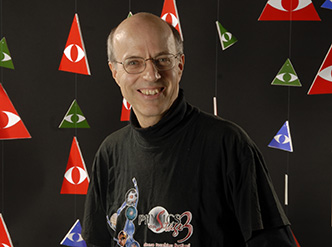
Lucy Patterson spoke to Rudolf Ziegelbecker, an Austrian physics teacher, about how to catch the imagination of even the most anti-physics students.
Read (English, French, Polish) | PDF [1.7 MB]
Scientist profile
- Jean-Luc Solandt: diving into marine conservation
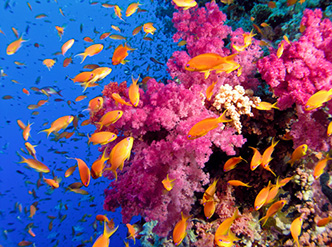
Marine biologist Jean-Luc Solandt tells Karin Ranero Celius about his commitment to study and preserve one of the world’s biggest treasures: the ocean.
Read (English, French, Italian, Polish, Spanish) | PDF [2.3 MB]
Review
Return to top of page
Science in School e-newsletter
|