Showing 10 results from a total of 29
September 7, 2026 | Issue 79
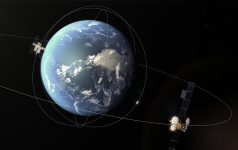
Over 15 000 satellites are currently orbiting Earth. Do you know what it takes to keep them up there?
Ages: 11-14, 14-16, 16-19; Topics: Astronomy / space, Engineering, Physics, Sustainability
April 2, 2026 | Issue 77
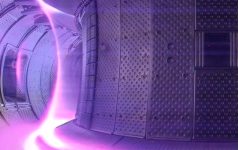
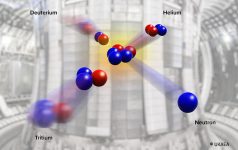
For fusion researchers, light is far more than a symbol, it is an essential tool.
Ages: 16-19; Topics: Engineering, News from the EIROs, Physics, Sustainability
June 10, 2025 | Issue 73
Low cost, high impact: try these creative and engaging experiments that use inexpensive everyday materials to bring curriculum science to life.
Ages: not applicable; Topics: Astronomy / space, Biology, Chemistry, Earth science, Engineering, General science, Physics, Resources, Science and society, STEAM, Sustainability
April 4, 2025 | Issue 72
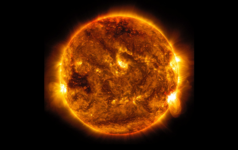
Starstruck: with just water, sunlight, and simple equipment, students can use their physics knowledge to calculate the temperature of the Sun.
Ages: 16-19; Topics: Astronomy / space, Earth science, Engineering, Mathematics, Physics
February 3, 2025 | Issue 71
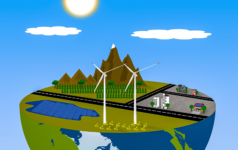
Strengthen knowledge in the subjects of energy supply, grid load, and data evaluation, while using 21st century skills in a fun way.
Ages: 16-19; Topics: Earth science, Engineering, Mathematics, Physics, Science and society, Sustainability
June 3, 2024 | Issue 68
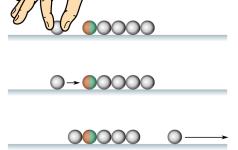
Turn your students into particle detectives and spark an interest in particle physics with an engaging and inexpensive science show for all ages.
Ages: <11, 11-14, 14-16, 16-19; Topics: Careers in STEM, Engineering, Physics, Resources
April 4, 2024 | Issue 67
Build a linear accelerator to demonstrate spallation – the source of high-energy neutrons used by the new European Spallation Source being built in Sweden.
Ages: 14-16, 16-19; Topics: Engineering, Physics
February 1, 2024 | Issue 66
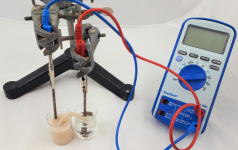
Redox reactions carried out by inexpensive baker’s yeast during breadmaking can also be used to demonstrate biofuel cells in the classroom.
Ages: 11-14, 14-16, 16-19; Topics: Biology, Chemistry, Sustainability
September 1, 2023 | Issue 64
Do air convection currents really move as they are drawn in textbook illustrations? Let’s make invisible convection currents visible using mist.
Ages: 11-14, 14-16, 16-19; Topics: Chemistry, Engineering, General science, Physics, Profiles