Martian habitats in the classroom: testing Artemia
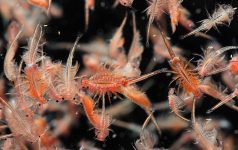
Explore Mars in the classroom through accessible experiments with Artemia, linking astrobiology, aquatic ecology, light responses, and scientific inquiry.
Showing 6 results from a total of 6
Explore Mars in the classroom through accessible experiments with Artemia, linking astrobiology, aquatic ecology, light responses, and scientific inquiry.
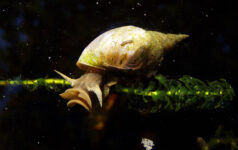
Using pond snails as a low-cost, hands-on model to teach biology and environmental science in secondary schools.
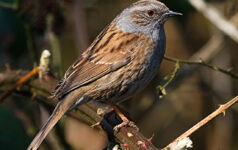
Tim Birkhead tells Karin Ranero Celius about promiscuous birds and teaching science students.
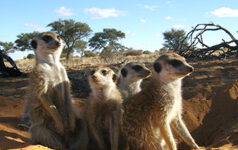
Mico Tatalovic from the University of Cambridge, UK, investigates the private lives of meerkats. Why do these small carnivores live in groups? Why do they feed each other’s pups, dig together and guard each other? And what makes a really good sentinel?
Everyone does it everywhere all the time. I am not talking about Germans smoking, Americans eating burgers, or adults having sex – although the latter gets us thinking in the right direction.
Silvia Boi, a science teacher from Italy, explains how her fascination with science led her to study ant behaviour, worm reproduction and the human genome – and how she now tries to awaken that fascination in her pupils, using somewhat unusual techniques.
Martian habitats in the classroom: testing Artemia
Snail-powered science: hands-on biology for active classrooms
Battle of the birds: interview with Tim Birkhead
Sentinels: meerkat superheroes
The Talking Ape: How Language Evolved, By Robbins Burling
A zoologist at school: my pupils and other animals