Primary circuses of experiments
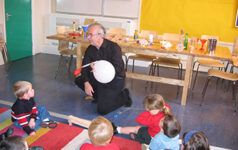
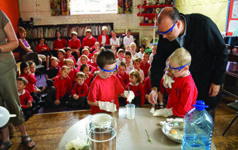
Catch them young! Alex Griffin, Tim Harrison and Dudley Shallcross from the University of Bristol, UK, show how important it is to interest young children in science – and how much fun it can be!
Showing 10 results from a total of 727
Catch them young! Alex Griffin, Tim Harrison and Dudley Shallcross from the University of Bristol, UK, show how important it is to interest young children in science – and how much fun it can be!
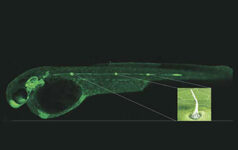
Why are cells like wildebeest? Laura Spinney investigates the migration of cells and the formation of organs, using the tiny and transparent zebrafish.
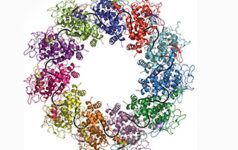
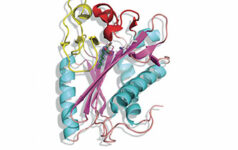
Sigrid Griet Eeckhout from the European Synchrotron Radiation Facility in Grenoble, France, investigates what determines the toxicity of mercury compounds – and how X-ray light is helping to solve the mystery.
Professor Lewis Wolpert discusses his controversial ideas about belief, science education and much more with Vienna Leigh from the European Molecular Biology Laboratory.
Henri Boffin from ESOw1 in Garching, Germany, follows the mystery of gamma-ray bursts from their first discovery to the most recent research on these dramatic astronomical explosions.
In the first of two articles, climate researcher Rasmus Benestad from the Norwegian Meteorological Institute examines the evidence for climate change.
Bringing marine science into the classroom can be challenging work for teachers. So why not take the classroom – and the teachers – to sea? Vikki Gunn’s Classroom@Sea project does just that.
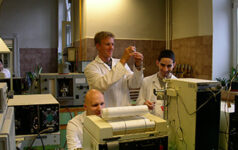
Students Jan Měšťan and Jan Kotek and teacher Marek Tyle from the Gymnázium Písek in the Czech Republic won the 2007 Catch a Star competition. Sai Pathmanathan describes their prize-winning project.
Professor Tim Hunt, winner of the 2001 Nobel Prize in Physiology or Medicine, talks to Philipp Gebhardt about his passion for science, the importance of pure research, the influence of enthusiastic colleagues – and the role of serendipity in scientific discovery.
Angelika Börsch-Haubold demonstrates the olfactory delights of organic chemistry.
Primary circuses of experiments
The great migration
Mercury: a poisonous solution
Interview with Lewis Wolpert
Fusion in the Universe: gamma-ray bursts
What do we know about climate? The evidence for climate change
Classroom@Sea: bringing real marine science into the classroom
Students Catch a Star: researching and observing a solar eclipse
Eyes on the horizon, feet on the ground: interview with Tim Hunt
Small molecules make scents